Skip to content

Interior painting

Indoors, the difficulty is that you live there while we do it. We prepare the base, protect what stays, and hand the room back clean. Across the whole province of Verona.

Request a free quoteFree site visit and quote, no obligation.

Where it starts

Four moments when a room gets repainted

Outside, you act when the façade deteriorates. Inside, you repaint when something changes: a job finished, a tenant, a new light. They are four different situations, and each changes the timing, the order and the way of working.

  • You've just had work done

    Rewired systems, a wall moved, a new bathroom: they leave traces, and different traces from each other. The filler and the old plaster absorb differently, and unless the absorption is evened out the same paint comes out duller in one spot and more satin in another. Painting is the stage that pulls together things done by different hands at different times.

  • The tenant is changing, or you're about to sell

    Here the window is narrow and the flat is empty, which is the best condition there is for working: no furniture to move, no rooms to clear in turn. One thing worth knowing: painting at the end of a tenancy remains the landlord's responsibility, because it counts as normal wear and tear of living, and passes to the tenant only if the contract says so explicitly.

  • The new light shows everything

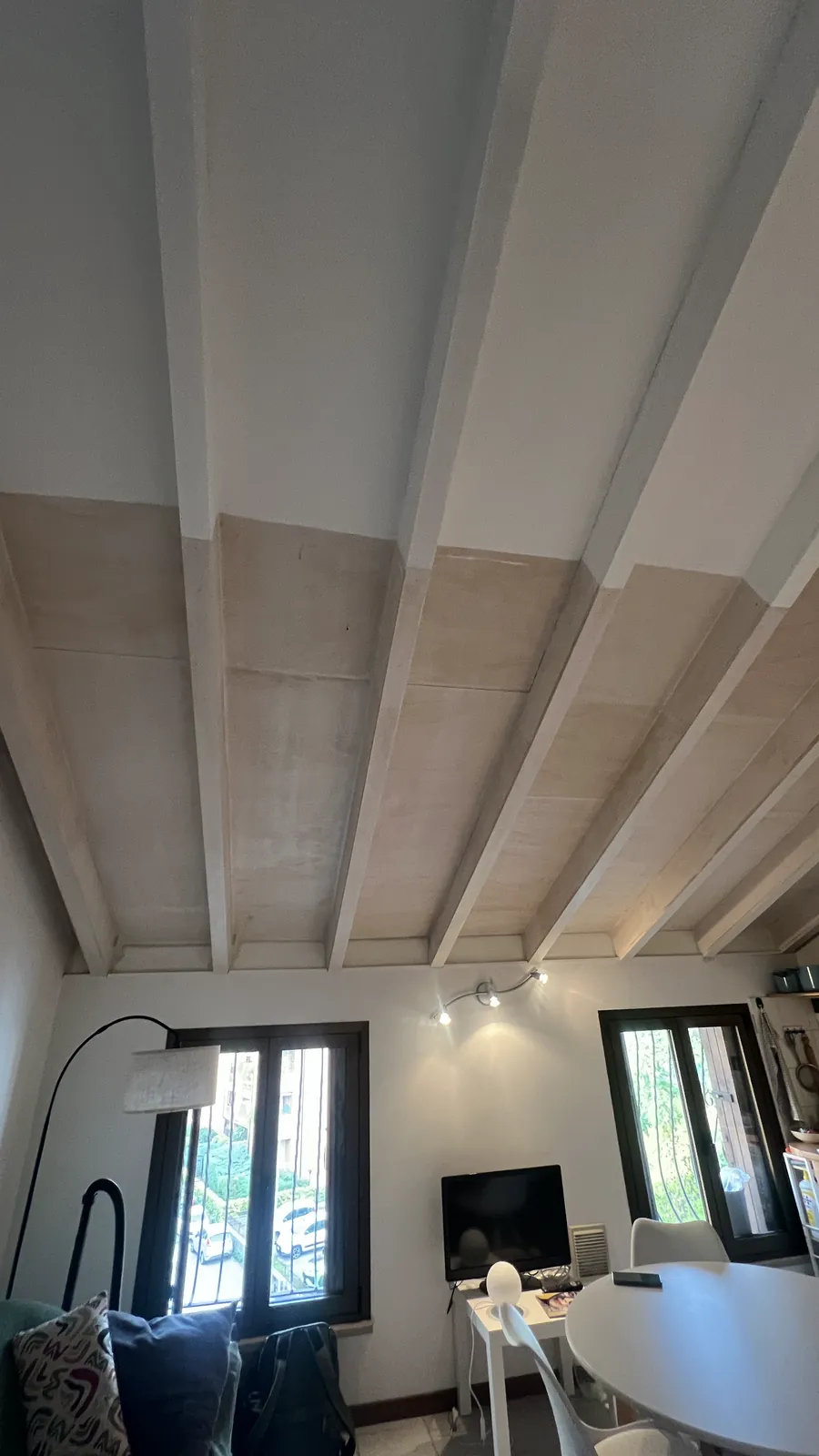
    An LED strip, a raking lamp, a bigger window: light arriving almost parallel to the wall is the harshest judge there is. It brings out imperfect flatness, old patches, filling nobody noticed before. What has to be redone is the base, brought back flat, and that is decided before a tin is opened.

  • The room is simply tired

    Marks above the radiators, yellowed corners, shadows behind the furniture, a white that is no longer white though nobody can say since when. It is the most common situation and the most underrated: it is also the one where you can really choose, because there is no damage to repair and all the work goes into the result.

How we work

The system,
inside your home

A job inside a home is half the trade. The other half is the painting. These are the five things we do in a room, in the order we do them.

Request a quote
  • Protect first, then touch

    Furniture moved or covered, floors protected, doors and frames masked, the rooms not being worked on closed and sealed against dust. These are the hours that separate a job from a disaster.

    Before starting we agree together what gets moved, what stays and in what order the rooms are cleared, so the house does not become unusable all at once.

  • Protect first, then touch
  • The base is brought back flat

    The parts that do not hold come off, cracks and holes are filled, and where needed the wall is skimmed to bring the surface back to an even flatness.

    It is the part that cannot be seen and that decides everything: a well-filled wall and a hastily filled one can only be told apart afterwards, and only in the right light.

  • The base is brought back flat
  • The absorption is evened out

    Fresh filler and old plaster drink differently, and the same paint laid over two different bases comes out different: duller where the base absorbed more, tighter where it absorbed less.

    That is what the sealing primer is for: to make the wall react the same way over the whole surface. Skipping it is the quickest way to see the patches.

  • The absorption is evened out
  • The finish is chosen in the room's own light

    Matt forgives imperfections but marks; satin is washable, but under raking light it shows every flaw in flatness.

    The right choice is the one that is right for that wall, in that light and with the people who live there: a hallway with children and a bedroom wall ask for different things. The colour has to be tried on the spot and looked at at different times of day.

  • The finish is chosen in the room's own light
  • The room is yours again, clean

    The protection comes down, everything is cleaned, things go back where they were.

    Then there is the part that depends on the product and not on us: the air needs changing, and before really using a bedroom again it is worth letting it air. We use water-based products, which cut the smell a great deal compared with solvents, but the change of air is still what makes the difference.

  • The room is yours again, clean
Before and after

The same room, a different light

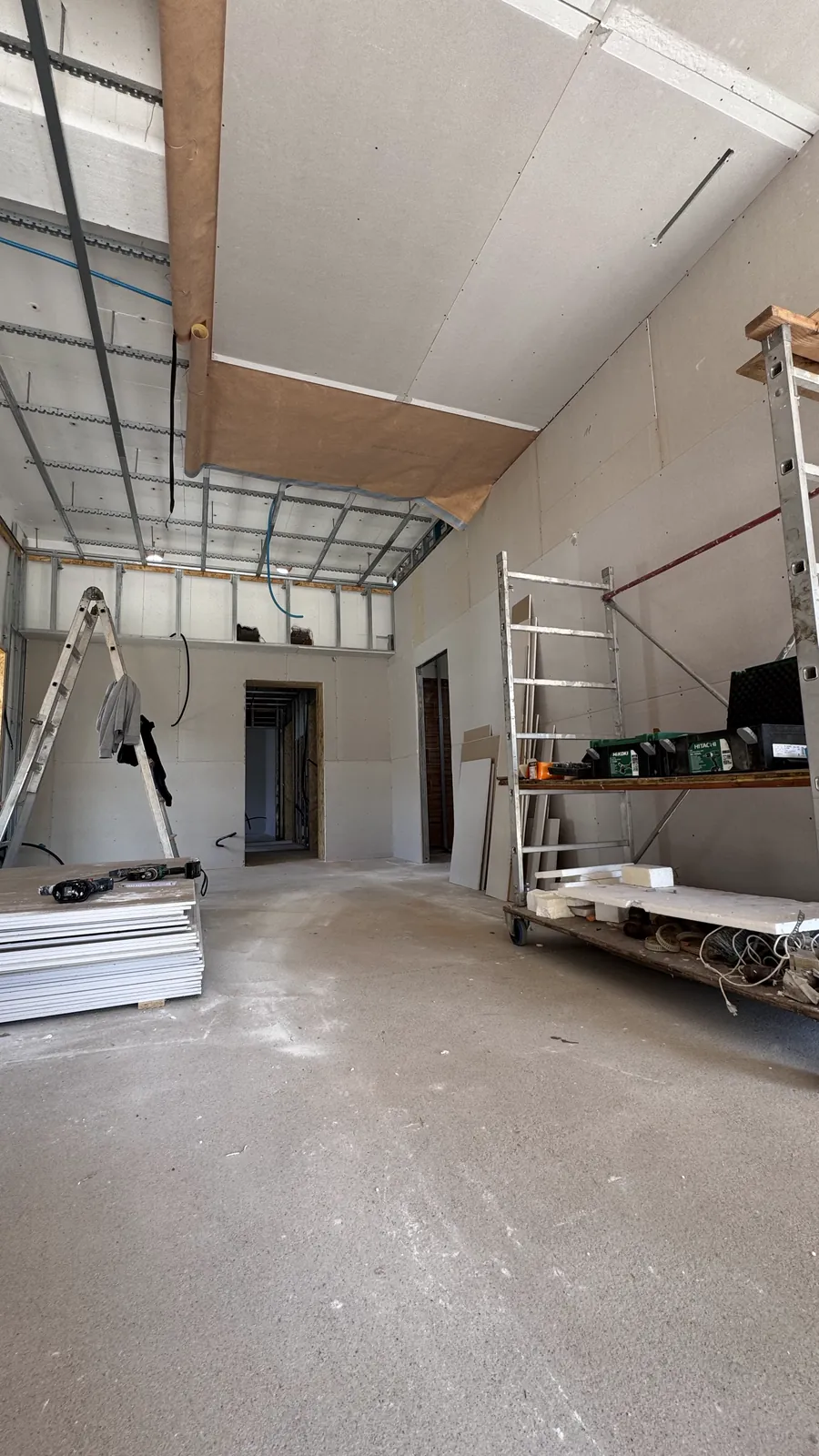
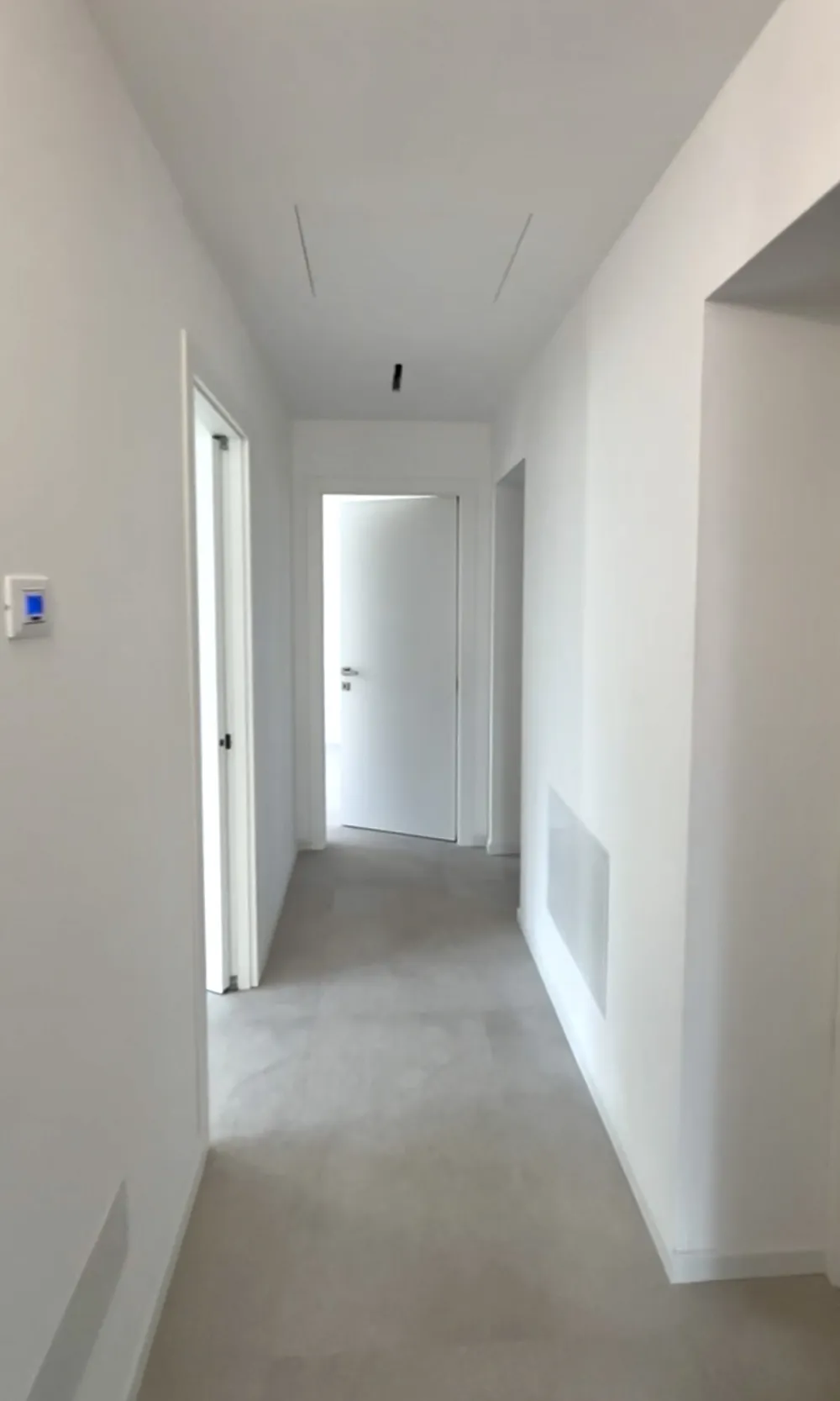
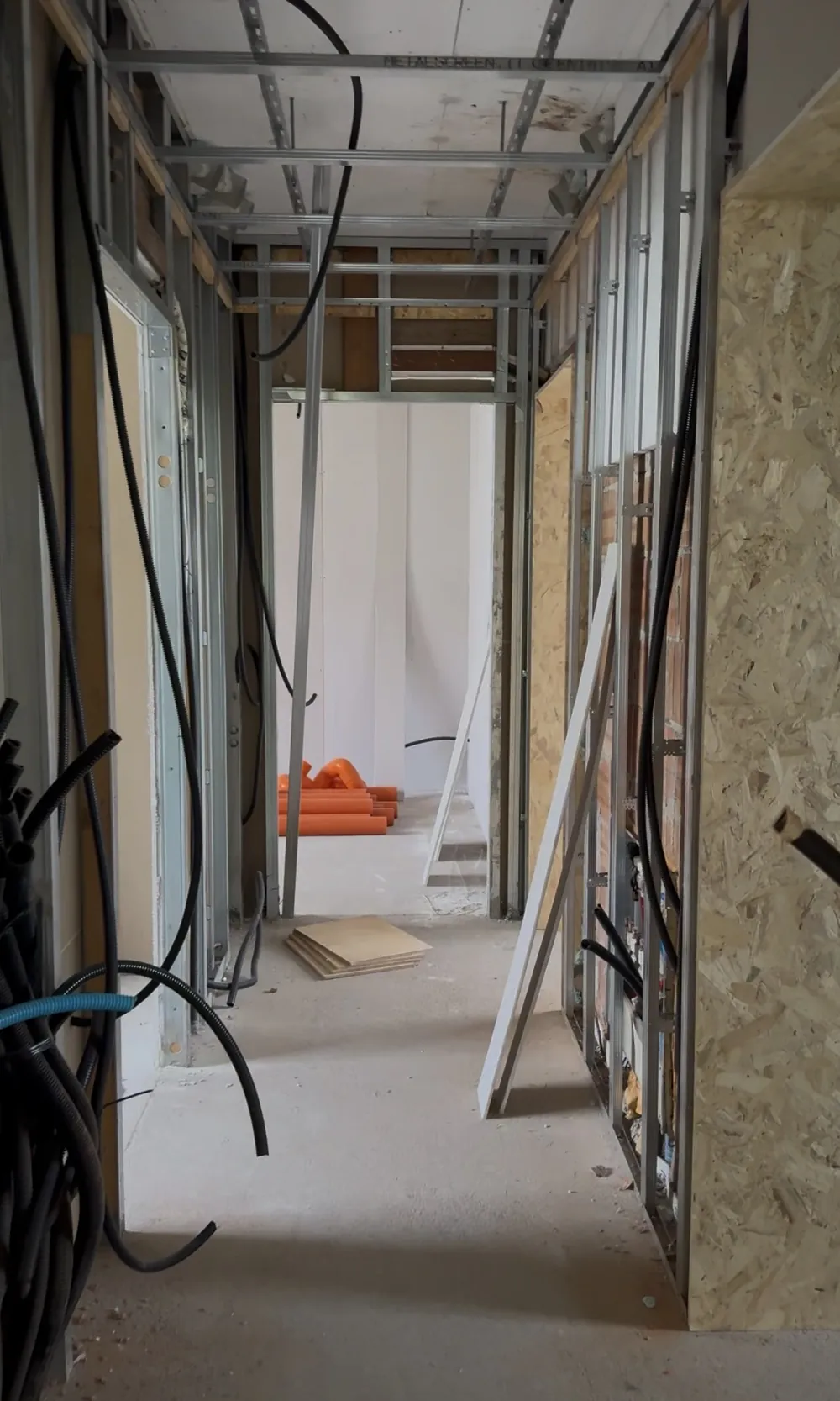
A hallway before and after: from the metal profiles and exposed cables to the finished surface. Press and hold on the picture to run the roller across.

The base before anything else
Filling, skimming and a sealing primer: the paint is the last thing that happens.
No patches showing under the light
Even absorption is what avoids the duller areas and the traces of filling.
The house stays liveable
We work room by room, with the dust contained and the protection taken down every evening.
A hallway, from the profiles to the finish: after the workAfter
A hallway, from the profiles to the finish: before the workBefore
Press and hold
A hallway, from the profiles to the finish

Your situation

Do you live there, or is it a property you let?

The wall is the same. Everything else changes: who decides, when work can be done, how invisible the job has to be, and who pays.

You live there

Occupied home, job inside the house

We work room by room, because a house cannot become unusable for days. What gets moved and in what order is agreed in advance, the dust stays contained where the work is, and every evening it comes down. As for when you can use the rooms again, what matters most is the change of air: the room is aired, and for a bedroom it is worth waiting a little longer than for a hallway.

  • We work room by room, with the others sealed against dust
  • Water-based products: far less smell than solvents, but the air still needs changing
  • On interior painting alone there is no tax deduction: it counts as routine maintenance
You let it or sell it

Empty property, narrow window

In an empty home the work goes better, faster and with less protection: it is the right moment, and it is usually also the moment when there is least time. Something almost nobody knows: at the end of a tenancy the painting remains the landlord's responsibility, because it counts as normal wear and tear of living; it passes to the tenant only if the contract says so explicitly.

  • In an empty home there is no furniture to move: the job is shorter and cleaner
  • At the end of a tenancy the painting is not the tenant's responsibility unless the contract expressly says so
  • Estate agents, letting managers and building managers are regular clients, with whom the work repeats over time

We are not legal or tax advisers. This is the general picture: your specific case depends on what the contract says and needs checking with the right professional.

Before you decide

What we leave you after the site visit

Inside a home the quote is also an agreement on how the work is done. What comes out of it we leave you in writing — even if you then choose someone else.

The site visit and the quote are free and commit you to nothing.

  • The state of the surfaces, room by room

    Where there are cracks, holes, old patches, filling that will show up in the light. It tells you in advance which walls need preparation work and which do not.

  • The site plan

    In what order the rooms are done, what has to be moved, what we cover and what is better taken out beforehand. It is the part that decides whether the house stays liveable.

  • The colour test on the spot

    The colour is looked at on your wall, in your light, at different times of day. A colour card seen in a shop is another thing altogether: the light changes, the size changes, and so does the idea you had formed of it.

  • The firm's documents

    Company registration, contributions certificate, insurance and training: they are all there and in order, and we give them to you the moment you ask. Anyone letting someone into their home has the right to know who they are.

  • The contract, if we go ahead

    When the quote is accepted we sign a contract that protects you and us in equal measure, and that both sides have to honour.

  • The guarantee, in writing

    The same four as always. On the last one we are categorical here, because these rooms are going to be lived in again: when you come back there is nothing else for you to do, and where needed we bring in a cleaning company.

    • That the colour holds: it does not shift, streak or fade.
    • That the materials are compatible with the surface they go on.
    • That the work is carried out to professional standards, following the manufacturers' technical sheets.
    • That the site stays clean and tidy, during the work and at the end.

Want to know how much work lies under the paint?

We come and see the rooms. If the base is sound we say so, and if there are walls that need skimming we say so before we start.

Book a site visit

Frequently asked questions

How much does interior painting cost in Verona?

The price depends on how much work there is before the paint: a sound wall that needs freshening up, one that needs filling and skimming, and one with mould to be treated are three different jobs, and the colour costs the same in all three. That is why the figure comes after the site visit, which is free, together with the timescale we commit to.

What is the difference between a washable paint and a breathable one?

They are two qualities that answer two different problems. A washable paint has a tighter, more compact surface: it resists rubbing and can be cleaned, which is useful where walls get touched and dirty (hallways, kitchens, children's rooms). A breathable paint, on the other hand, lets water vapour through, so the moisture that forms inside the house does not get trapped under the finish. The more washable a paint is, the less breathable it tends to be: that is why the choice is made room by room, looking at how the wall is used and what state it is in.

Can you paint over a wall that is already coloured?

Almost always yes, but it depends on what is underneath. If the existing finish is well bonded and does not chalk, the base is prepared and we proceed. If it is coming away, feels chalky to the touch or has blisters, it has to be removed: new paint applied over an unstable base comes off together with the old one. Going from a dark colour to a light one takes more coats, and some very saturated shades remain visible through the new paint unless the base is sealed first.

When does a wall need skimming, and when is a coat of paint enough?

Skimming is needed when the problem is the surface itself. An uneven plaster, full of patches, old wall plugs or shrinkage cracks cannot be hidden with paint: raking light shows them up, and the more satin the finish, the more they show. In those cases the wall is skimmed to bring it back flat. If instead the wall is sound and even, we fill what needs filling, sand and paint.

Do the site visit and the quote commit me to anything?

No. The site visit is there to look at the wall with our own eyes: to understand what state the substrate is in, whether there are cracks, damp or old finishes to remove, and which steps are really needed. Only then can a quote be put together that stands up. Until that point there is no commitment to make.

Do I have to move out while you work?

Hardly ever. We work room by room: an area is cleared, protected, sealed against dust, and we move on, so the house stays liveable. The order of the rooms is agreed together before starting, taking into account where people sleep and eat. We ask you to leave the house empty in two cases only: when the rooms are cramped and there is no way of working round things, and when there are several people at home. The less commotion, the better and the faster the work goes.

How long before I can sleep again in a freshly painted bedroom?

It depends on the product and above all on how much the air is changed. With the water-based wall paints we use, the smell is very limited compared with solvent-based products, and the widespread good practice is to wait at least one night with the room aired, two if you can. If the smell lingers, it is worth airing a little longer before using the room again.

Do you move the furniture?

We move it, cover it and protect it: it is included. What cannot be moved goes to the middle of the room and is covered, and the floors are protected completely: protection is part of the job. Working in empty rooms remains the best condition, and if we need you to clear the property we tell you at the site visit.

Matt finish or washable?

They are two opposite compromises, and the choice is made on the wall in front of you. Matt forgives the imperfections of the base but marks more easily. Satin and washable finishes stand up to cleaning but under raking light show every flaw in flatness, so they need a better-skimmed base. A hallway with children and a bedroom wall do not need the same thing.

How much dust does a painting job make?

It makes some, and almost all of it comes from the preparation: sanding, filling, skimming. It is managed by containing it as it is produced: rooms not being worked on closed and sealed, openings protected, and the protection taken down and cleaned at the end of every day.


Where we work

We do interiors across the whole province

Interiors do not depend on the weather the way façades do, which is why they are the work that fills the cold season: we go inside when outside nothing can be applied. The rest is decided by the type of property, and it changes from one town to the next.

  • Verona

    The city: flats, offices and lettings with frequent turnover. Here the window between one tenant and the next is often the only time work can be done in an empty home.

  • Albaredo

    The plain, detached and family homes: interiors are redone room by room, with the house occupied, and the site plan matters more than the colour.

  • San Giovanni Lupatoto

    The urban belt: many small blocks and flats, where the job has to live alongside neighbours, lifts and the building's hours.

  • Villafranca di Verona

    Between detached houses and small blocks: we work both for people who live there and for people who let, and they are two different jobs.

  • Legnago

    The lower Verona plain: large homes and country houses, often with high ceilings and extensive surfaces, where the preparation weighs more than the finish.

  • Bussolengo

    The gateway towards the lake: first homes and rented flats alternate, with timings that depend on the season.

  • Peschiera del Garda

    A lakeside town: second homes and holiday lets, redone out of season, when the flat is empty.

Free site visit and quote, always, in Verona and its province

It starts by looking at the surface

The site visit is there to understand what condition the substrate is in and which coating system it really needs. The quote comes afterwards, for what actually has to be done.